
Reviewed · AUSTIN SIGHTSEEING & DRIVING TOURS
Austin and Hill Country Panoramic Sightseeing Tour
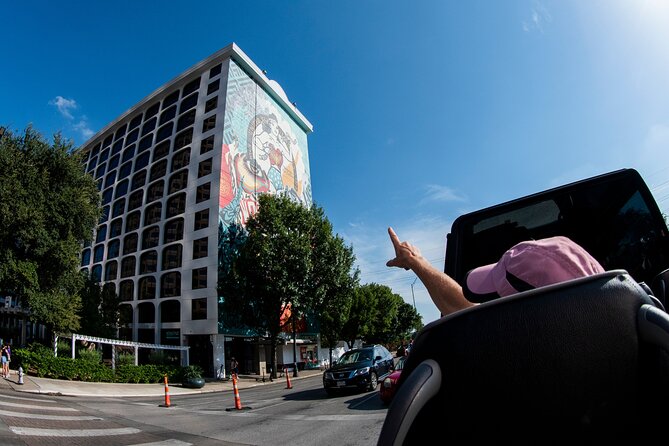
Austin’s best angles come fast. This 2.5-hour guided sprinter van tour is a smart way to get oriented, with headsets in English and Spanish and photo stops at famous landmarks like the Driskill, Barton Springs, and Austin’s Central Library. You’ll also swing west toward Hill Country highlights, with the route subject to change or substitutions.
I especially like the comfortable, air-conditioned Mercedes-Benz sprinter feel, plus the quick stops that let you see more than you could on foot or rideshare. I’m also a fan of the way the tour frames Austin’s signature sights—Lady Bird Lake, Congress Avenue Bridge bats, and classic downtown corners—so you leave knowing what to come back for later.
One thing to watch: not every seat is equally good for panoramic views. If panoramic framing matters to you, pick your seat carefully and be ready for some viewing differences.
In This Review
- Quick take: what you’ll remember most
- Starting in downtown Austin: the Visitors Center and a small-group ride
- Headsets in English and Spanish: how the narration works on the move
- Zilker Metropolitan Park and Barton Springs: the Austin backyard feel
- Congress Avenue Bridge bats: the nightly spectacle you can understand fast
- 2nd Street District and Auditorium Shores: downtown without the stress
- Mount Bonnell and scenic viewpoints: quick elevation, big rewards
- Wild Basin Wilderness Preserve: a taste of Hill Country hiking habitat
- Art and parks stops: Umlauf Sculpture Garden and a slower Austin moment
- Barton Creek Greenbelt: where outdoor Austin lives year-round
- Laguna Gloria: a 1916 villa story tied to the Colorado River
- Austin Central Library and the Driskill Hotel: architecture that earns a pause
- East Sixth Street Historic District: old Austin trade blocks you can clock in quickly
- Value check: what you get for $73 and how to maximize it
- Who should book this Austin and Hill Country panoramic tour
- Should you book? My take on the decision
- FAQ
- How long is the Austin and Hill Country panoramic sightseeing tour?
- Where does the tour start?
- What languages are available on the tour?
- Is food included in the price?
- What’s included with the tour?
- Do I need a child safety seat?
- Is there free cancellation?
Quick take: what you’ll remember most
- Bats at Congress Avenue Bridge: learn why this is one of Austin’s most famous nightly sights.
- Headsets in English and Spanish: clear audio as you move between neighborhoods and viewpoints.
- Hill Country photo stops: Mount Bonnell and the Pennybacker Bridge area give you big sky views fast.
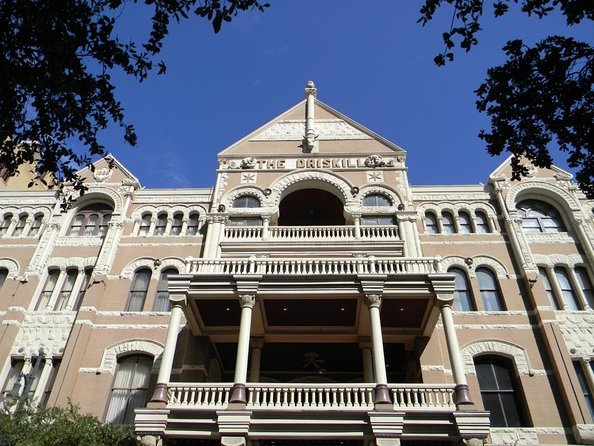
- Downtown icons: the Driskill Hotel and Austin Central Library make great quick photo breaks.
- Small group size (max 14): you’re more likely to get helpful guidance and smoother timing.
The whole of Austin in one loop


Starting in downtown Austin: the Visitors Center and a small-group ride

Your tour meets at 103 E 5th St., a convenient downtown pickup point that helps you start without long commuting. From there, you’re in a roomy Mercedes-Benz sprinter style vehicle, built for comfort over a chunk of Central Austin and into the Texas Hill Country.
A key value point here is the small group limit: up to 14 travelers. That doesn’t mean you’ll be “private,” but it often means quicker boarding and less bottlenecking at stops.
You’ll get a mobile ticket, and service animals are allowed. Also, since the tour depends on good weather, it’s worth planning your sightseeing day with a bit of flexibility.
Headsets in English and Spanish: how the narration works on the move
This tour uses headsets with two language options: English and Spanish, which is great if you’re traveling with mixed-language group members. You can use the provided earbuds, and the tour note says you may use your own too.
Expect a mix of guided context and audio-style storytelling rather than a long, slow lecture at every stop. That can actually be a plus on a short day: you get enough background to understand what you’re seeing, then you’re free to enjoy the moment and take photos.
One practical tip: since some info may come through recorded audio, don’t worry if you miss a sentence while the van is moving. The stop structure is designed so you can still connect the dots on your own.
Zilker Metropolitan Park and Barton Springs: the Austin backyard feel
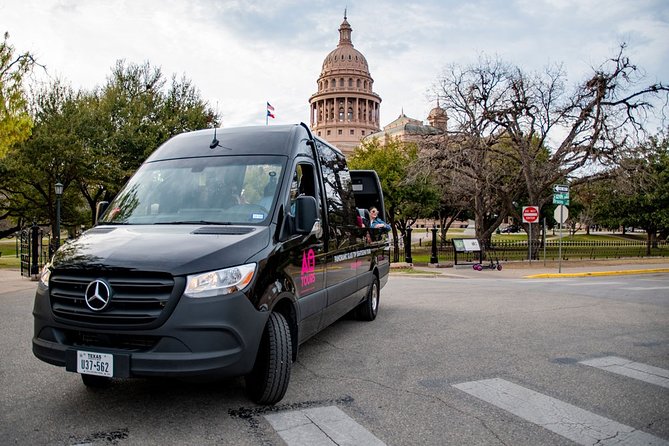
The first big “Austin identity” stop centers on Zilker Metropolitan Park, widely considered Austin’s most-loved park, with plenty of space for recreation and events. Even if you don’t have time to explore the whole park on foot, the area gives you that classic Austin vibe: outdoor living, sunny paths, and a strong community feel.
From there, you head to the Barton Springs area at Barton Springs Pool. The pool is fed by underground springs and stays around 68–70 degrees, which is a huge reason it’s a year-round draw. If you’re visiting in hot months, it’s one of those stops that helps you understand why locals treat this as a daily kind of place.
A consideration: this is more about seeing the setting than spending a long stretch inside the water. If swimming is your goal, use the stop time to decide what you want more—views and photos now, or a dedicated half-day later.
Congress Avenue Bridge bats: the nightly spectacle you can understand fast
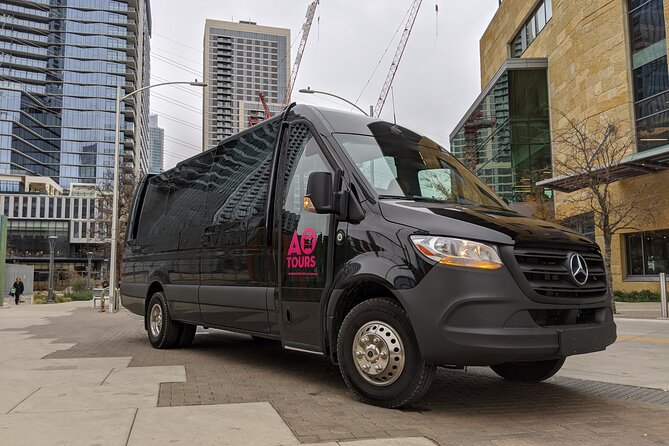
Lady Bird Lake is already a star, but Congress Avenue Bridge is its wild side. The tour highlights the bridge’s famous urban bat colony—750,000 to 1.5 million Mexican free-tailed bats under the deck in summer. The key detail is timing: they spend summers in Austin and winters in Mexico.
Even if you don’t catch the full bat flight, this stop helps you understand why the bridge is such a big deal and why people build their schedules around it. The tour’s storytelling gives you context you won’t get just from looking at the bridge from a distance.
Photo-wise, you’ll want to grab quick shots of the bridge structure and the lake in the background. If you’re sensitive to noise, be aware that bridge areas can get busy during peak hours, even when your own stop time is short.
Out past the city into the Hill Country


2nd Street District and Auditorium Shores: downtown without the stress

After the bat bridge area, the tour heads toward downtown zones where you can walk, stretch, and reset your senses.
2nd Street District is where you’ll see Austin’s mix of local retail and restaurants, plus entertainment spots you’d otherwise have to hunt down. It also lines up well for quick people-watching, since this is a concentrated area where street life and music culture intersect.
Then you move to Auditorium Shores, on the south shore of Lady Bird Lake (formerly Town Lake). This area is known for skyline views, and the tour also includes the presence of a memorial statue of Stevie Ray Vaughan—a nice touch if you want Austin’s music story to feel part of the skyline, not stuck in a museum.
One drawback to know: these are not long, freeform wandering hours. You’re moving in and out on a schedule, so if you want to shop or eat, treat this as your cue to come back later with more time.
Mount Bonnell and scenic viewpoints: quick elevation, big rewards
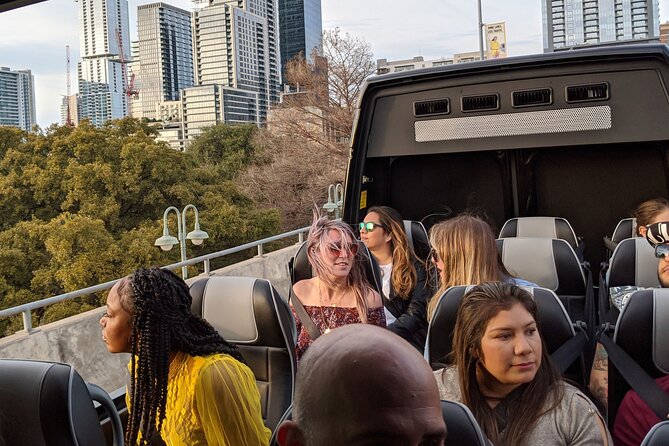
If you’ve only got a couple days in Austin, you’ll love this part for its efficiency. Mount Bonnell (also known as Covert Park) gives you one of the faster ways to see the city from above. The Colorado River section around Lake Austin is the main backdrop, with views stretching over Austin and surrounding hills.
This stop is short—about 15 minutes—but it’s the type of stop that can completely change how you imagine the city. Austin can feel spread out, and a viewpoint like this helps you understand how the neighborhoods relate to the river and hill country.
Another scenic highlight comes later through the Pennybacker Jr. Bridge area, which connects parts of the Loop 360 highway. It’s widely considered one of the scenic drives in Texas, and the arched weathering-steel design makes it a good “get the photo” moment even if you’re only there briefly.
Bring a light layer if it’s windy at viewpoints. Hill country edges can feel cooler and gustier than downtown.
Wild Basin Wilderness Preserve: a taste of Hill Country hiking habitat

For the outdoor-minded, the tour includes Wild Basin Wilderness Preserve in Westlake Hills, listed at 227 acres of native Texas Hill Country habitat. The preserve has 2.5 miles of hiking trails, which is enough to stretch your legs without turning this into a full hike day.
This stop is ideal if you want the “Hill Country looks like this” lesson without committing to a strenuous trek. You’ll get the feel of the terrain—dry, rocky, and scrubby in many spots—while still having time to keep seeing the city.
Reality check: with a tour schedule, you won’t be wandering for hours. If you’re dreaming of long trails, treat this as a preview and then plan a dedicated half-day or full day later.
Art and parks stops: Umlauf Sculpture Garden and a slower Austin moment

The tour includes the Umlauf Sculpture Garden & Museum, home to the largest collection of American sculptor Charles Umlauf’s work. Even on a short stop, a sculpture garden changes your pacing. Instead of chasing photos of famous buildings, you start noticing texture, shapes, and how art sits in open air.
You’ll also see the tour include Mayfield Park and Preserve, described as an island of rest in central Austin. It’s listed on the National Register of Historic Places, and it was presented to the city in 1971 so Austinites could enjoy it as a park.
This part of the tour is valuable because it balances the photo-heavy stops. If your only Austin plan was music venues and restaurants, these parks and art spaces help you understand why people love living here.
Barton Creek Greenbelt: where outdoor Austin lives year-round
The tour also works in the Barton Creek Greenbelt, often the go-to place for people who like hiking, biking, climbing, swimming, and just hanging out. The description includes rock-climbing and bouldering options, plus day-style relaxation like sunbathing and hammock time along the creek.
The route notes that there are about 12 miles of trails with several access points around Austin. That’s a big number, and it helps explain why the greenbelt matters so much to locals.
A practical consideration: greenbelt terrain can be uneven. Comfortable shoes help, and you should expect some variation in footing depending on which access point your stop time allows.
Laguna Gloria: a 1916 villa story tied to the Colorado River
One of the most interesting stops is Laguna Gloria Art Museum, described as a Mediterranean-style villa built in 1916 for Henry H. and Clara Driscoll Sevier. The site name connects to a nearby lagoon off the Colorado River.
It’s also tied to preservation history: the villa was conveyed to the Texas Fine Arts Association in 1943, and Clara Driscoll is noted for her efforts to preserve the Alamo. If you like connecting big Texas stories, this is a stop that links Austin’s art scene to the wider state narrative.
Like several other stops, it’s not a long museum day. Think of it as an art-and-architecture overview plus a chance to appreciate the setting.
Austin Central Library and the Driskill Hotel: architecture that earns a pause
Two of the tour’s downtown anchors are Austin Central Library and the Driskill Hotel.
At the central library, you’ll get a quick look at energy-efficient design work and the mix of indoor and outdoor spaces. The tour description calls out a living rooftop garden, reading porches, an indoor reading room, a bicycle corral, and an art gallery plus café run by the ELM Restaurant Group. For a short stop, it’s a lot to take in, and the rooftop garden and porches are exactly the kind of places you’d miss if you only walked downtown for food.
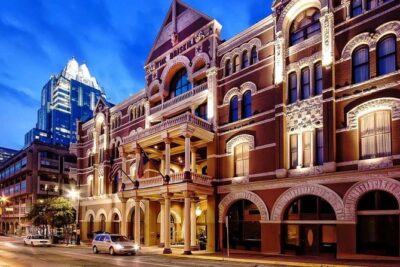
Then comes the Driskill, a landmark built in 1886 as a showplace of a cattle baron. You’ll get time to stroll the opulent lobby: marble floors, a stained-glass dome, and corridors with museum-quality artwork. It’s one of those places where even a brief look makes you feel like you stepped into old Austin for a few minutes.
One drawback to remember: since these are popular stops, they can be busy depending on the day and season. Your time is timed, so plan for crowd navigation rather than expecting an empty quiet stroll.
East Sixth Street Historic District: old Austin trade blocks you can clock in quickly
The tour also includes the Sixth Street Historic District for a look at an area known for late-1800s trade and commercial buildings. The predominant style is two- or three-story masonry Victorian commercial architecture, with major structures already built by the 1880s and a few notable exceptions.
The description points out the Driskill Hotel as one of the key historic buildings in the area, along with the Scarbrough Building (1910) and the Littlefield Building. This helps connect the tour stops, so the Driskill isn’t just a stand-alone stop—it’s part of a larger streetscape story.
If you want a quick feel for where Austin’s earlier commercial energy and today’s culture overlap, this stop does that job.
Value check: what you get for $73 and how to maximize it
At $73 per person for around 2 hours 30 minutes, this tour competes well with piecemeal sightseeing. The big value is that it bundles a lot of famous stops into one coordinated route: parks, lake views, downtown landmarks, and Hill Country viewpoints.
It also includes some extras that add practical comfort: the luxury vehicle, the headsets, and earbuds (plus the note that you can use your own). You’ll also get a PinkTag partner souvenir luggage tag, plus the tour covers iconic Austin sites as part of the experience.
Where you need to be strategic is with expectations:
- Panoramic viewing isn’t guaranteed for every seat. One review issue was that front seats didn’t deliver the same views as advertised, so if panoramic photos are your priority, ask where you should sit when you arrive.
- Some parts may lean on recorded audio, so if you want constant live guiding every minute, you might crave more time at fewer stops.
- Photo stops can feel fast. That’s the point of the format, but it means you’ll likely want follow-up plans after the tour.
If you’re on a first visit and don’t want to rent a car, this is a strong way to map out your next moves.
Who should book this Austin and Hill Country panoramic tour
This tour is a good match if you:
- Want a first-day orientation to downtown Austin and the river
- Prefer a comfortable vehicle over constant rideshare hops
- Like seeing a mix of landmarks, parks, viewpoints, and architecture in one outing
- Travel in a small group and enjoy a guided narrative rather than self-planning every stop
It may be less ideal if you:
- Care deeply about getting the same best views from every seat
- Want a long, slow museum or hiking day
- Expect food included or a full meal stop
If you’re traveling with kids, the tour notes a Texas safety seat rule for children under eight (unless they meet height requirements). Plan ahead so you’re not scrambling at pickup.
Should you book? My take on the decision
If your goal is to get your bearings fast and see Austin’s top hits—Lady Bird Lake, Congress Avenue Bridge, Barton Springs, downtown landmarks, and quick Hill Country viewpoints—this tour is easy to recommend. The mix of famous stops and practical timing makes it a smart use of a short visit, especially if you don’t want to drive.
Just go in with two clear expectations: choose your seat with panoramic views in mind, and treat the stops as previews. If you do that, you’ll finish the ride with a stronger sense of where Austin is going in your own itinerary next.
FAQ
How long is the Austin and Hill Country panoramic sightseeing tour?
It runs for approximately 2 hours 30 minutes.
Where does the tour start?
The meeting point is at 103 E 5th St., Austin, TX 78701.
What languages are available on the tour?
The vehicle has headsets with both English and Spanish language options.
Is food included in the price?
No. Food and beverage are not included, but you can bring your own.
What’s included with the tour?
The tour includes a luxury air-conditioned vehicle, earbuds (and you can use your own), and coverage of the iconic Austin sites. It also includes a signature PinkTag partner souvenir luggage tag.
Do I need a child safety seat?
For Texas State Law, adult guests with children younger than eight years old (unless taller than 4 feet 9 inches) need to bring a child safety seat.
Is there free cancellation?
Yes. You can cancel up to 24 hours in advance for a full refund, and within 24 hours the amount paid is not refunded.
More Tour Reviews in Austin
- Best of Austin Small-Group Driving Tour with Local Guide
★ 5.0 · 2,275 reviews - Austin Biker Gang E-Bike Tour
★ 5.0 · 1,399 reviews - Austin Food Tour with Local Flavors, Tacos & 6 Food Tastings
★ 5.0 · 987 reviews - Double Decker Austin Single Loop Sightseeing Tour
★ 4.5 · 979 reviews - From Austin: Hill Country BBQ & Wine Shuttle
★ 5.0 · 954 reviews
Out into the Texas Hill Country
- From Austin: Hill Country BBQ & Wine Shuttle
★ 5.0 · 954 reviews - Austin and Hill Country Sightseeing Tour
★ 4.5 · 928 reviews - Half-Day Hill Country Wine Shuttle From Austin
★ 5.0 · 308 reviews - From Austin: Hill Country BBQ & Wine Shuttle
★ 4.9 · 190 reviews - Austin: City + Hill Country Non-Stop Panoramic Tour
★ 4.7 · 58 reviews
Austin End to End
- Best of Austin Small-Group Driving Tour with Local Guide
★ 5.0 · 2,275 reviews - Double Decker Austin Single Loop Sightseeing Tour
★ 4.5 · 979 reviews - Austin and Hill Country Sightseeing Tour
★ 4.5 · 928 reviews - Austin: Best of Austin Driving Tour with Local Guide
★ 4.9 · 248 reviews - Austin Sightseeing and Capitol Segway Tour
★ 5.0 · 246 reviews
Hot Off the Grill: New Austin Reviews
- Austin’s Treasures Private tour: A Heroic Downtown Discovery Walk★ 5.0 · 3 reviews
- Private Clear Kayak Tour on Lady Bird Lake in Austin, Texas★ 5.0 · 3 reviews
- Lake Austin Boat Cruise 1.5 Hour Scenic Tour BYOB Per Person★ 4.5 · 3 reviews
- Africa Hologram Adventure at Zoocade★ 3.5 · 3 reviews
- Go Tubing in Austin’s Downtown Spring River★ 5.0 · 3 reviews
Austin Sightseeing & Driving Tours, compared.
 ★ 5.0Best of Austin Small-Group Driving Tour with Local GuideFrom $492,275 reviews
 ★ 4.5Double Decker Austin Single Loop Sightseeing TourFrom $36979 reviews
 ★ 4.5Austin and Hill Country Sightseeing TourFrom $33928 reviews
 ★ 4.9Best of Austin Driving Tour with Local GuideFrom $49248 reviews
 ★ 5.0Austin Sightseeing and Capitol Segway TourFrom $37246 reviews
 ★ 4.0Austin Premium Driving Tour with Sunset Boat CruiseFrom $94174 reviews
 ★ 4.5Austin Famous Ghost and Bat Segway TourFrom $69151 reviews
 ★ 4.8Electric Bike City Sightseeing TourFrom $69141 reviews
Browse the lists this tour appears in