
Reviewed · DOWNTOWN AUSTIN WALKING TOURS
Downtown Austin Historical Architecture Walk
Austin’s buildings tell stories fast. This guided downtown walk strings together government, Victorian neighborhoods, and early 1900s landmarks so you can see how Austin looked as it grew. You’ll start near Capital Square, then head toward a mix of exterior-only stops and one inside visit at the Driskill.
I especially like how the tour turns big architecture into plain, usable details—what style shows up, why it changed, and what you should notice while you’re standing there. The guide for my trip, Emily, also handled questions well and even helped with extra ideas for where to go next when the walk wrapped up.
One possible drawback: it’s a walking tour with mostly short stops and lots of exterior viewing. If weather is bad or you’d rather go inside more than once, you may want to know that the schedule is built around quick, focused looks rather than long indoor time.
In This Review
- Key takeaways
- Why This Downtown Austin Architecture Walk Works So Well
- Price and Logistics: Is $56 Actually Worth It?
- Start at 103 E 5th St.: Getting Oriented in Central Austin
- Stop 1: The Driskill Interior Visit and the Architecture Behind the Drama
- Stop 2: Bremond Block and the Story in Post–Civil War Victorian Homes
- Stop 3: Heman Marion Sweatt Travis County Court House from the Outside
- Stop 4: Texas Governor’s Mansion, Then and Now
- Stop 5: Texas State Capitol on the South Lawn and Its Architecture Tales
- Stop 6: Saint Mary Cathedral and the Construction Story You Can See
- Stop 7: Capitol Complex Visitors Center and the Odd-Fit Effect
- Stop 8: Paramount Theatre Ornamentation Across the Street (1915)
- Making the Most of the Walk: Pace, Photos, and Questions
- Who Should Book This Downtown Austin Architecture Walk?
- Should You Book It? My Decision Rule
- FAQ
- How long is the Downtown Austin Historical Architecture Walk?
- Where does the tour start?
- What time does the tour begin?
- How much does it cost?
- Is the tour in English?
- Is the ticket mobile?
- Are there any inside stops?
- Do you need good weather?
- Are service animals allowed?
- What is the cancellation policy?
Key takeaways
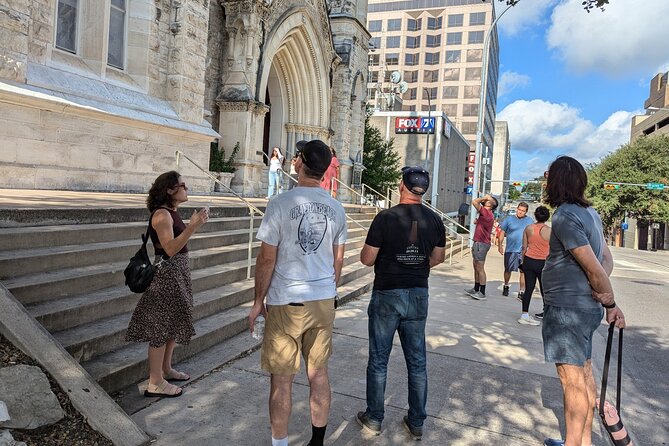
- See Austin’s architectural shifts up close—from government-era buildings to Victorian homes to early 1900s public landmarks.
- One meaningful interior stop at the Driskill, so you’re not only looking from the sidewalk.
- Short, efficient timing keeps you moving through central blocks in about 1 hour 45 minutes.
- Great value for the price because the tour includes a guide and free admission tickets for the stops where admission applies.
- Small group feel with a maximum of 25 travelers, which helps questions stay easy.
Austin at walking pace, more routes




Why This Downtown Austin Architecture Walk Works So Well
This isn’t the kind of “history talk” where you spend the whole time staring at a brochure. You move block by block, and each stop gives you a new lens: government power, post–Civil War housing, early 20th-century civic design, and theatrical ornamentation.
I like that the tour is built around specific downtown landmarks rather than vague neighborhoods. You’re not guessing what you’re looking at—you’re learning what to notice while you’re there, which makes the whole route stick in your mind.
The pace is also realistic. With roughly 10 to 20 minutes at most stops, you get enough time to read the vibe of the building without getting stuck in one place for an hour in the Texas sun.
Price and Logistics: Is $56 Actually Worth It?
At $56 for about 1 hour 45 minutes with an English guide, the value comes from what’s included and how the time is used. You’re paying for expert storytelling plus a structured route through central Austin, not just a casual walk.
Also, several stops come with free admission tickets in the experience itself. In practice, that matters because you get an inside moment at the Driskill without having to separately buy something just to make the tour feel complete.
Your other “cost” is energy. Expect moderate walking and short stops that move you along quickly. The tour also works only when weather cooperates, so if there’s rain or extreme conditions, you should be ready for a different date or a refund option.
Start at 103 E 5th St.: Getting Oriented in Central Austin
The meeting point is 103 E 5th St., Austin, TX 78701, and the tour starts at 9:45 am. Ending back at the meeting point keeps the whole thing simple—no complicated transit planning mid-tour.
If you like to photo-document a trip, starting in this area helps. You’re close to the Capital Square zone, and you’ll quickly shift from government-focused architecture to the older residential fabric nearby, then back toward major public buildings.
This is also a smart time slot because you’re not trying to sightsee through the hottest part of the day. You’ll still get Texas weather—just more manageable in the morning.
Stop 1: The Driskill Interior Visit and the Architecture Behind the Drama
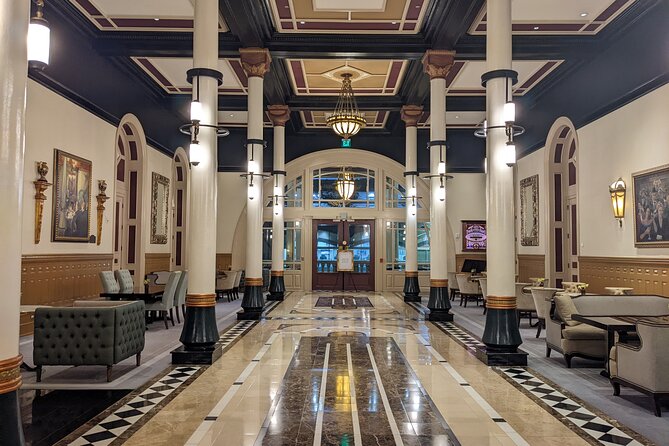
The Driskill is the big inside stop on the route, and it’s a good way to start. You’ll spend about 20 minutes here, and the emphasis is on what inspired the building’s architecture and how that inspiration plays out over time.
What I find useful is the way the guide connects design choices to the bigger story of the city. Instead of treating the Driskill like a pretty façade, you get prompts on what to notice—materials, styling cues, and the sense of occasion the building was meant to project.
It also sets a tone for the rest of the tour. Once you’ve seen one major downtown landmark up close, you’ll start spotting patterns and contrasts at the next stops rather than just absorbing names.
Austin on foot, more routes
Stop 2: Bremond Block and the Story in Post–Civil War Victorian Homes
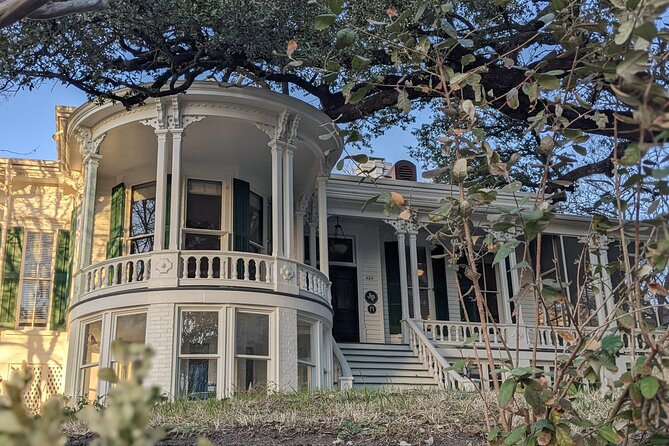
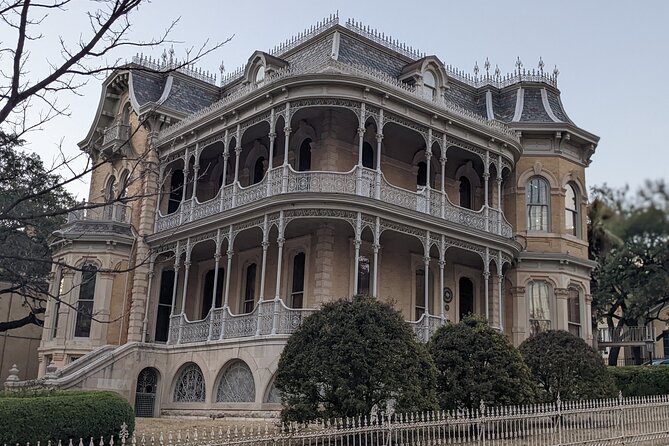
Bremond Block is where the tour slows just enough to make you look at a whole streetscape, not a single building. You’ll take a stroll around a well-preserved block of Victorian homes and learn how their architectural evolution shows up in the details.
This is the stop I’d recommend to you if you’re the type who likes to compare. Victorian style often means lots of visual “clues,” and the tour helps you read those clues—what changed as the neighborhood matured and how those houses fit into Austin’s growth.
You’ll get about 20 minutes at this stop, so you can still move on without feeling rushed. But it’s long enough to walk the block at a comfortable pace and step back for a couple good angles.
Stop 3: Heman Marion Sweatt Travis County Court House from the Outside
This is a shorter stop (around 10 minutes), but it’s memorable because of what the guide frames it as: an example of predepression Art Deco civic design. Even from the outside, you can learn how that style communicates authority and modernity.
The courthouse stop is also a good “reset” moment between residential texture and the heavier government buildings ahead. Here, you’re looking at the city’s legal and administrative identity—less about homes, more about public structure.
If you’re aiming for photos, stand where you can take in the façade without tangling up with pedestrians. The time is brief, so it helps to have your phone/camera ready rather than fumbling at the last second.
Stop 4: Texas Governor’s Mansion, Then and Now
The Texas Governor’s Mansion is one of the tour’s best examples of contrast. The mansion can look out of place amid today’s mix of government and commercial buildings, but the guide explains how the blocks were covered in houses about 100 years ago—and some were even larger than the mansion.
That context changes how you see the building. Instead of asking why it looks like it should be somewhere else, you start thinking about how downtown Austin’s center of gravity has shifted over time.
This stop is also around 10 minutes, which makes it perfect for a quick mental recalibration. You get enough time to understand the “why” behind the current scene, not just stare at the present-day mix.
Stop 5: Texas State Capitol on the South Lawn and Its Architecture Tales
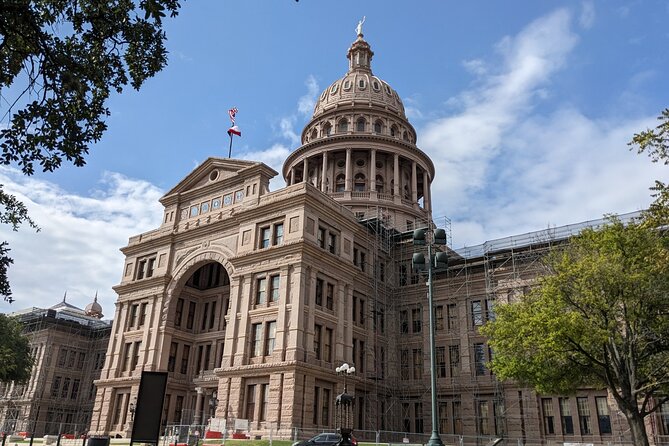
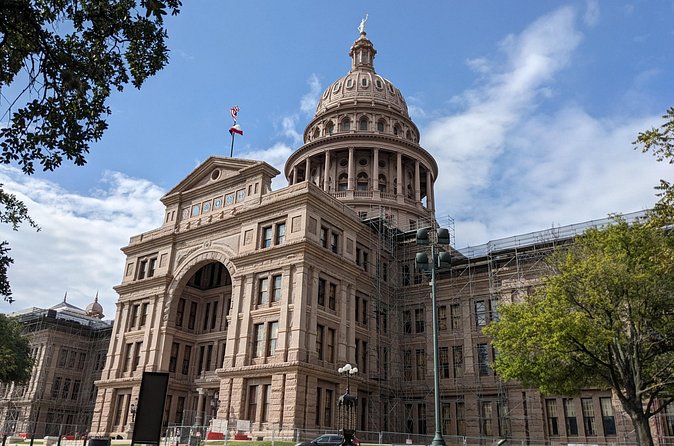
The Texas State Capitol is a stop people already know, but this tour uses it in a smart way: you learn from what you can see from outside on the south lawn. The emphasis is on architectural details and the building’s role as the largest State Capital building in the country.
You’ll have about 10 minutes here. With a building this big, it’s easy to feel overwhelmed on your own. Guided time helps because you’re not trying to memorize everything—you’re getting a handful of key architectural stories that you can map onto what’s in front of you.
If you want value from this stop, keep your expectations realistic. You won’t be touring every corner, but you will leave with clearer talking points for the Capitol’s design and how it relates to the city’s growth.
Stop 6: Saint Mary Cathedral and the Construction Story You Can See
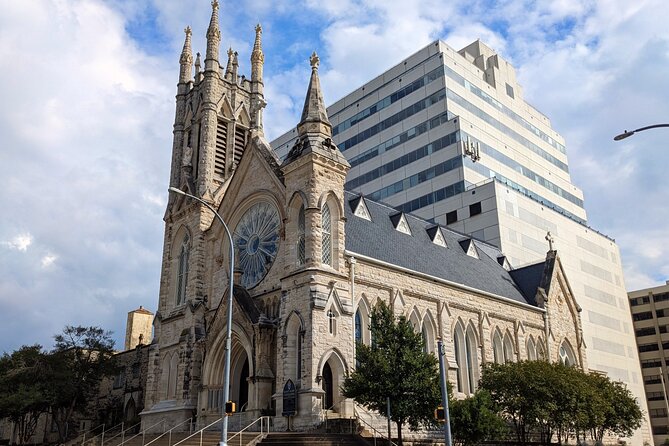
Saint Mary Cathedral is another exterior-focused stop, around 10 minutes. From outside, you’ll learn about the cathedral’s history and its unique construction.
This is the kind of stop where the guide’s explanations help you avoid “pretty building only” mode. You’ll likely find yourself looking longer at shapes and structure rather than just admiring the look. That’s the best use of time on an architecture walk.
If you’re visiting in a season with strong light, you may want to step around a bit for different angles. The tour keeps moving, but a quick reposition can make a difference in what details you catch.
Stop 7: Capitol Complex Visitors Center and the Odd-Fit Effect
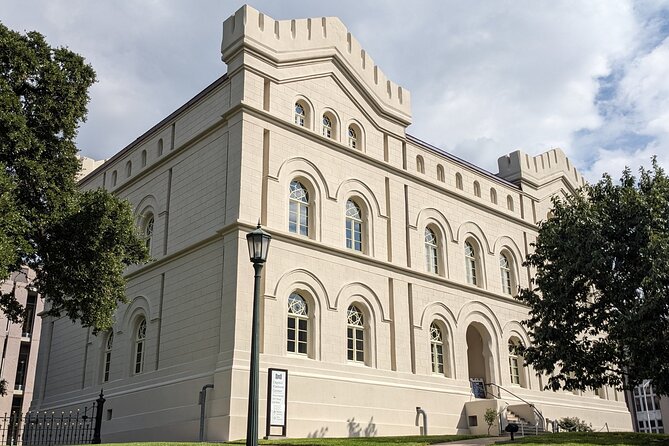
The Capitol Complex Visitors Center is described as not fitting in with its neighbors, and that contrast is part of the lesson. You’ll look from outside and discuss the oldest and possibly strangest state building still standing in Austin.
This stop is valuable because it trains your eye to notice style differences instead of assuming everything in a complex belongs to the same era. You’ll start thinking like a preservation-minded visitor: what’s older, what’s newer, and how the mix happens in real cities.
You get about 10 minutes, so treat it like a “thinker” stop. While you’re there, try to connect the center’s look to the surrounding government structures you’ve already seen on the walk.
Stop 8: Paramount Theatre Ornamentation Across the Street (1915)
The last stop is the Paramount Theatre, with about 5 minutes for a great view of the theatrical ornamentation from across the street. It’s a tight wrap-up, but it works because it shifts the mood from civic and religious buildings to entertainment and design flair.
This is where you can let your attention drift to decorative elements—how early 1900s theater architecture tried to draw you in before you ever reached the doors. It also helps you see that downtown Austin’s architecture isn’t only about official institutions.
If you want a final photo, make it here. By then, you’ll be more aware of what to look for, and that makes the shot more satisfying.
Making the Most of the Walk: Pace, Photos, and Questions
This tour works best if you come with curiosity and a willingness to read buildings like clues. Each stop is short, so you’ll get more out of it if you keep your questions tight: what’s the key style point here, and what detail should I focus on?
For photos, don’t just aim for wide shots. Plan one or two details per stop—corners, ornamentation, rooflines, or entrances—because those are the things you’ll remember when the tour moves on.
The group stays under 25 travelers, which helps. You’re not swallowed by a crowd, and you’re more likely to catch the guide’s answers without shouting over people.
Finally, go in expecting a guided viewpoint. If you want to wander completely on your own afterward, that’s great—but the real win is letting the tour teach you how to look first.
Who Should Book This Downtown Austin Architecture Walk?
Book it if you want a guided way to understand central Austin’s architectural evolution without doing heavy planning. It’s ideal for couples, first-timers, and anyone who likes seeing how a city’s identity shows up in buildings.
It’s also a good fit if you enjoy architecture but don’t want to spend the whole day hunting details solo. The route is compact, the structure is clear, and the guide’s explanations help you leave with names and themes you can use later.
If you prefer long indoor visits or you hate walking outdoors, you may find the exterior-heavy format and short stop times less satisfying. Still, the Driskill interior makes it feel like more than just a sidewalk stroll.
Should You Book It? My Decision Rule
I’d book this tour if your goal is practical: learn what to notice in downtown Austin and get a high signal-to-time ratio. For $56, you’re paying for a guided route with free admission included where it matters most, plus a pacing plan that covers major architectural themes in about 1 hour 45 minutes.
I wouldn’t book it if you only want deep, extended time inside multiple buildings. This is a “see and understand” walk, not a long museum-style experience.
If you do book, consider arriving early enough to settle in and be ready for the first inside stop at the Driskill. You’ll get more from the morning if you’re not rushing at check-in.
FAQ
How long is the Downtown Austin Historical Architecture Walk?
It lasts about 1 hour 45 minutes.
Where does the tour start?
The start is at 103 E 5th St., Austin, TX 78701, USA.
What time does the tour begin?
The start time is 9:45 am.
How much does it cost?
The price is $56.
Is the tour in English?
Yes, it includes an English tour guide.
Is the ticket mobile?
Yes, the tour uses a mobile ticket.
Are there any inside stops?
Yes. The Driskill is the one stop where you go inside.
Do you need good weather?
Yes. The experience requires good weather, and if it’s canceled due to poor weather you’ll be offered a different date or a full refund.
Are service animals allowed?
Yes, service animals are allowed.
What is the cancellation policy?
You can cancel up to 24 hours in advance for a full refund. If you cancel less than 24 hours before the experience’s start time, the amount paid is not refunded.
Austin on Foot: More Walks
- Haunted Austin Walking History Tour
★ 4.5 · 921 reviews - Austin Small Group Morning Walk
★ 5.0 · 412 reviews - Austin Murder Walk
★ 5.0 · 310 reviews - Austin Haunted Pub Crawl Walking Tour
★ 4.5 · 232 reviews - The Story of Austin: Downtown History Walking Tour
★ 5.0 · 216 reviews
More Tour Reviews in Austin
- Best of Austin Small-Group Driving Tour with Local Guide
★ 5.0 · 2,275 reviews - Austin Biker Gang E-Bike Tour
★ 5.0 · 1,399 reviews - Austin Food Tour with Local Flavors, Tacos & 6 Food Tastings
★ 5.0 · 987 reviews - Double Decker Austin Single Loop Sightseeing Tour
★ 4.5 · 979 reviews - From Austin: Hill Country BBQ & Wine Shuttle
★ 5.0 · 954 reviews
Downtown Austin on Foot
- Haunted Austin Walking History Tour
★ 4.5 · 921 reviews - Austin Small Group Morning Walk
★ 5.0 · 412 reviews - Austin Haunted Pub Crawl Walking Tour
★ 4.5 · 232 reviews - The Story of Austin: Downtown History Walking Tour
★ 5.0 · 216 reviews - Austin: Downtown History Walking Tour
★ 4.9 · 123 reviews
Hot Off the Grill: New Austin Reviews
- Austin’s Treasures Private tour: A Heroic Downtown Discovery Walk★ 5.0 · 3 reviews
- Private Clear Kayak Tour on Lady Bird Lake in Austin, Texas★ 5.0 · 3 reviews
- Lake Austin Boat Cruise 1.5 Hour Scenic Tour BYOB Per Person★ 4.5 · 3 reviews
- Africa Hologram Adventure at Zoocade★ 3.5 · 3 reviews
- Go Tubing in Austin’s Downtown Spring River★ 5.0 · 3 reviews
Downtown Austin Walking Tours, compared.
 ★ 4.5Haunted Austin Walking History TourFrom $27921 reviews
 ★ 5.0Austin Small Group Morning WalkFrom $32412 reviews
 ★ 4.5Austin Haunted Pub Crawl Walking TourFrom $34232 reviews
 ★ 5.0The Story of Austin: Downtown History Walking TourFrom $32216 reviews
 ★ 4.9Downtown History Walking TourFrom $29123 reviews
 ★ 4.5The Ghosts of Austin Walking TourFrom $2972 reviews
 ★ 4.9Morning History Walking Tour of Downtown AustinFrom $3271 reviews
 ★ 4.5Austin’s Afternoon StrollFrom $4033 reviews
Browse the lists this tour appears in